Part 9 of 25
Reading lessons
A reading lesson does not look like a math lesson, and that is deliberate. In math the thing your child works on is a number line or a set of blocks. In reading, the thing they work on is the text, so the text is the lesson: a real story or article, read from beginning to end, with somebody alongside them while they do it.
1. Before you read
One line saying why we are reading today. Not “read this story”, but something your child can carry with them: a story has three parts, and you will find them by asking what is happening to the problem. Under it is the cover, and often a guess to make before the story opens.
There is also a Read to me switch. It reads each part aloud and lights each word as it goes. It is off by default from Grade 1, because a child who can already read the words is slowed down by hearing them at the same time. Before Grade 1 it starts on, and it stays however you set it.
2. Reading, one part at a time
The story arrives in three or four parts. The parts ahead are still on the page, greyed out, so nothing is hidden and nothing is a surprise. After each part a tutor says what they noticed — the sort of thing a good reader thinks and never says out loud — and then asks one question.
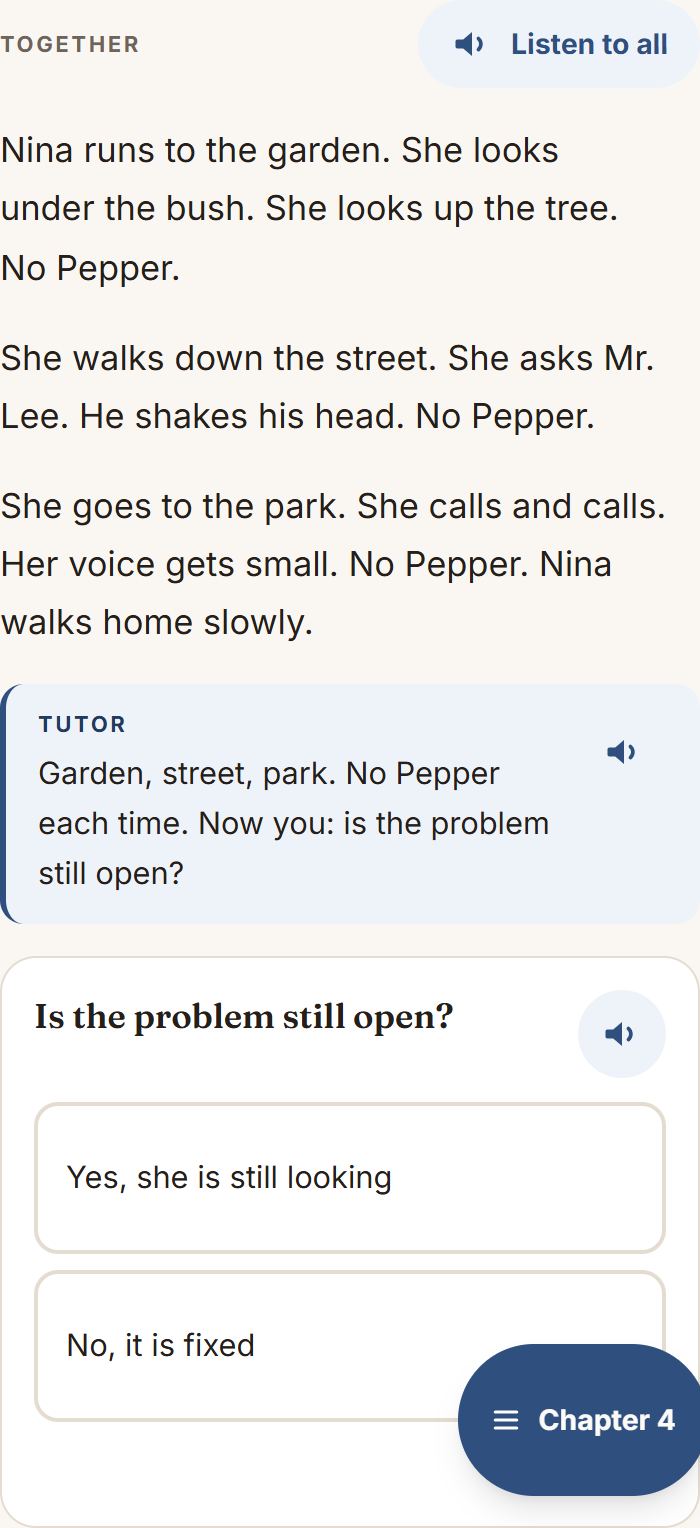
- The tutor shows. On the first part the tutor does the noticing, so your child sees what it looks like before being asked for any of it.
- Together. On the next part the tutor starts the thought and your child finishes it with one tap.
- Your turn. On the last part the question comes with no help. Same question, no scaffolding.
3. The whole story
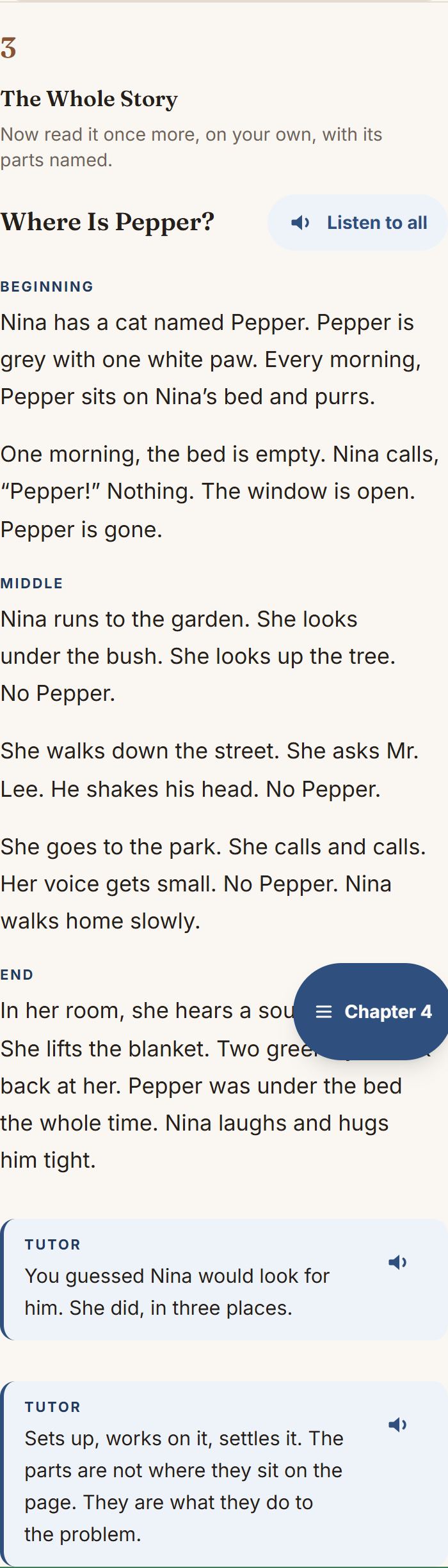
Once every question has been answered, the whole text appears again, clean, with its parts named down the side. Any guess made at the start is settled here in the tutor’s voice. This second read is the point rather than a reward: reading something again for a different reason is the best-evidenced thing anybody does with a text.
4. My notebook, from Grade 3
From Grade 3 there is one more step: two things your child noticed, in their own words, typed and kept on the device. Nobody marks them and they are not part of finishing the lesson. They appear on your family page, which is the only place on that page showing something your child wrote rather than something they got right.
One text, read several times
A chapter is built on one text rather than four. Grade 2’s chapter on how stories are built reads the same story four times: for its three parts, for the problem that causes everything, for who is telling it, and finally beside a second story to compare it with.
That is on purpose. The second reading of anything is done by somebody who already knows how it ends, and it finds things the first cannot. By the fourth lesson the words are familiar, which frees your child’s attention for the thinking.
What counts as finishing
The questions. Reading the story again at the end cannot be checked, and the notebook is nobody’s business but your child’s, so neither fills the bar. A child who has answered every question has done the lesson.
What has not changed
The letters, sounds, blending, sight-word and writing chapters in Pre-K, Kindergarten and Grade 1 still work the way they always have, with letters to trace and sounds to blend. Those chapters already have something to touch, and the evidence on early reading is clear that they should keep it. The new shape is for the chapters about stories, information and meaning.
Chapter checks
A reading chapter check asks about short passages your child has not seen before, rather than about the story from the lessons. That measures reading rather than memory of what the tutor said. As everywhere else, only the first attempt counts, and it can be retaken as often as you like.
What next
Worksheets and printing covers the practice sheets, which for reading are built out of the lesson’s own questions.