Part 3 of 25
The home page
This is the first screen you see. There is a lot on it, so here it is one piece at a time, from the top down.
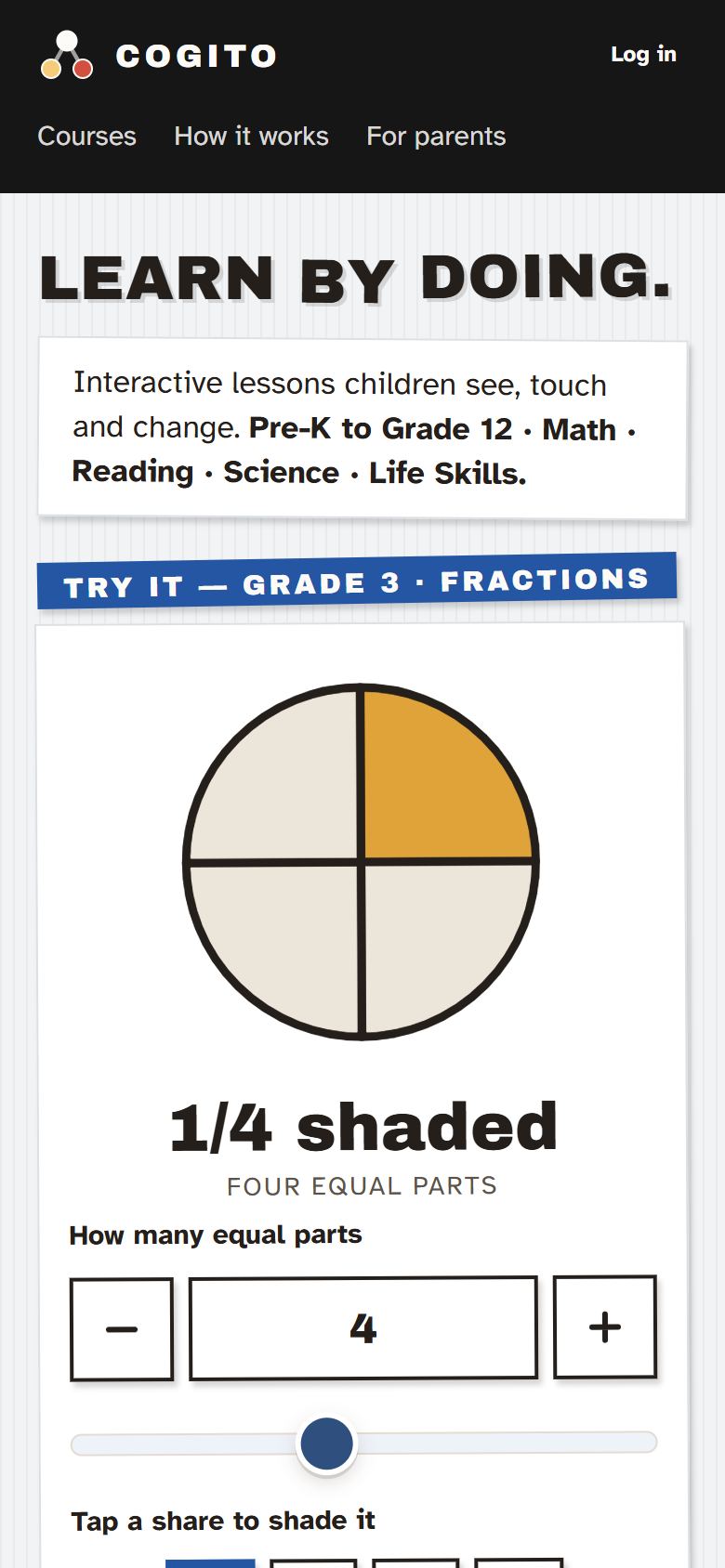
1. The bar at the top
A black strip runs across the top. It is the same on every screen of the site before you sign in.
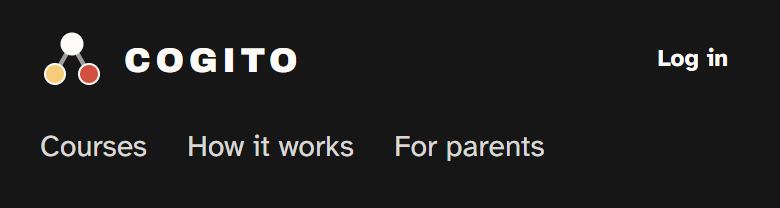
- Courses — every course, chapter and lesson in one list.
- How it works and For parents — further down this same page, rather than pages of their own.
- Log in — sign in, or make an account.
2. The board: a question, something to try, what was found
The first screen is laid out like a science-fair board, in three panels. It is meant to be read left to right, and the middle one is the point.
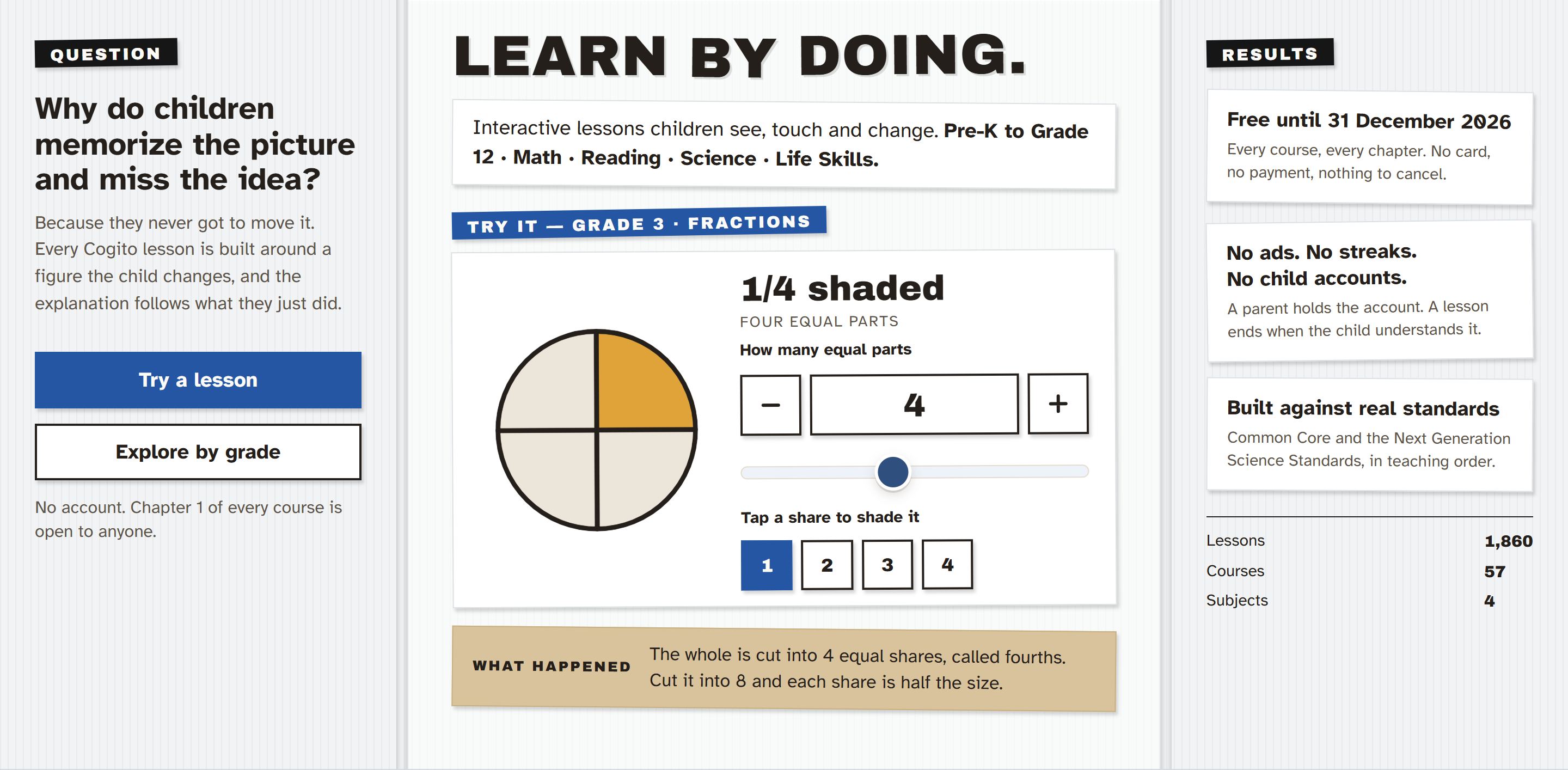
- Question, on the left — why children can memorize a picture and still miss the idea. Underneath are the two ways in: Try a lesson opens a real Grade 3 lesson, and Explore by grade or level opens the course list. Neither asks for an account.
- Learn by doing, in the middle — and under it a real lesson figure, not a picture of one. Change the number of parts and the circle re-cuts itself; tap a share and it shades. The kraft slip underneath says what just happened, and it changes with what you did.
- Results, on the right — the three things a parent usually asks first: what it costs, what it does not do, and what it is built against.
3. Written methods
Below the board is a row of four sums set out the way they are written on paper: column addition, column subtraction, long multiplication and long division. Press Next step and one square fills, with the move written underneath: the carry small above the next column, the borrowed digit crossed out, the rows of a long multiplication, the bracket of a long division.
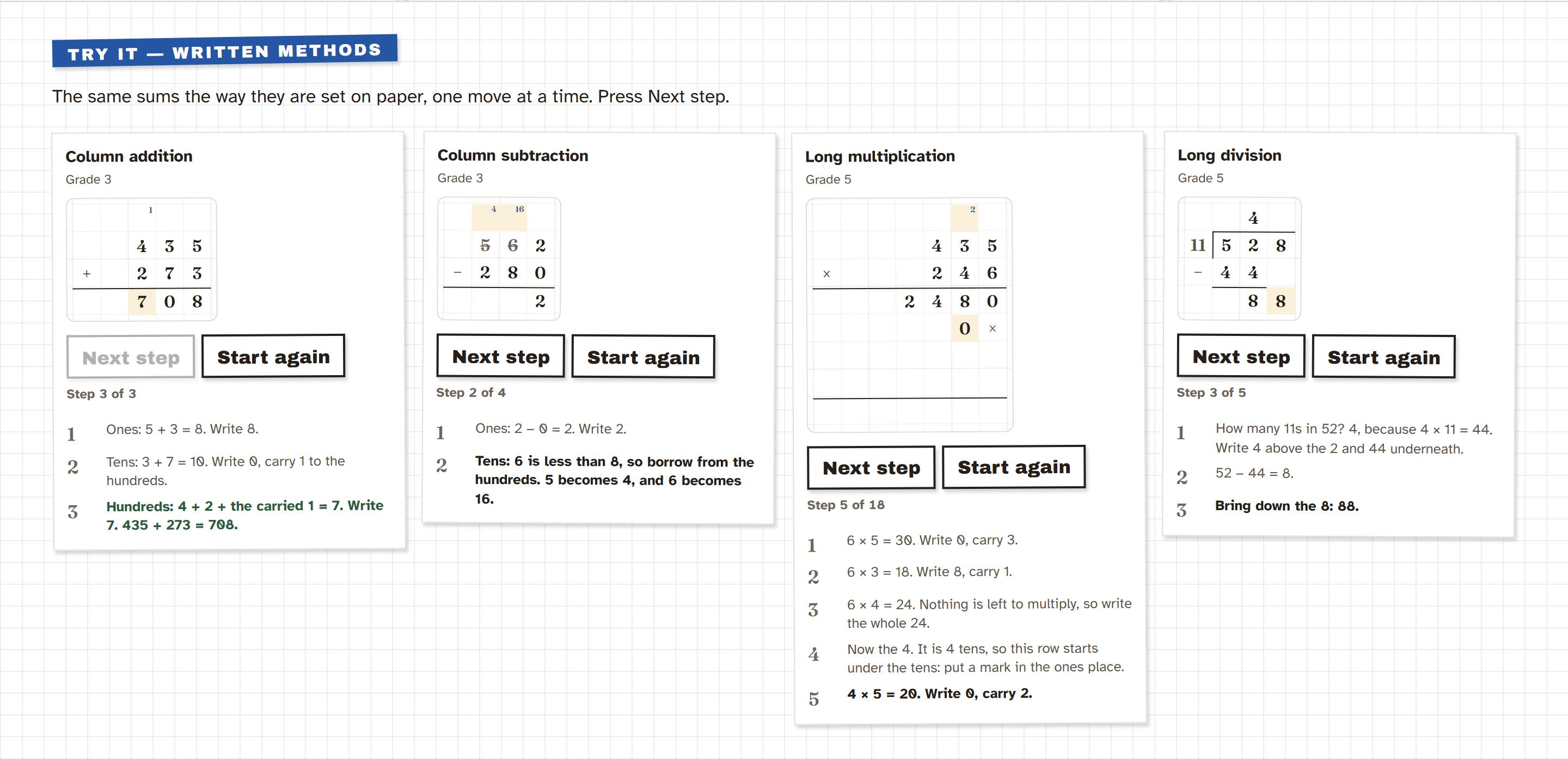
Each says which grade teaches it. The same boards, with numbers your child can change, sit at the end of the chapters that teach each operation.
4. Grades and subjects
Next come two lists: every grade from Pre-K to Grade 12, and the four subjects with how much each holds.
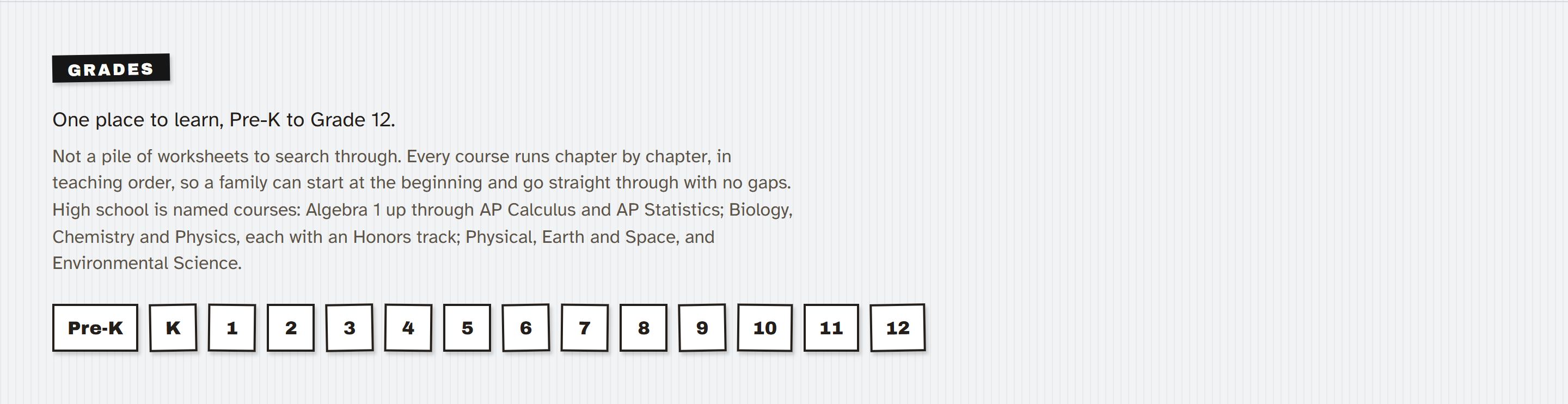
These are the fastest way to see whether your child’s year is covered. Tapping through goes to the same course list as Courses at the top.
5. What is deliberately not here
Further down, a short section headed Materials not used: no ads, no streaks, no child accounts. They are listed because they are the three things most children’s apps do, and each was left out on purpose rather than not got round to.
After it are For parents, Life Skills — the subject that is free in full — and a short close.
6. Once you are signed in: Today
Everything above is the home page for somebody who has not started. Sign in and the board gives way to a single panel at the top, headed with the one thing to do next. It answers one question, and it never offers two.
- A lesson left part-way is always the headline — Carry on, with where they stopped.
- Otherwise, whichever homework is open today, with how long it takes. Underneath are the five slips of the week, so you can see at a glance what is done and what is next. This week explains them.
- Today’s homework done, or the whole week done: a tick and what tomorrow brings. Never one more.
- Nothing started at all: the first lesson of your child’s grade, and one line saying what happens after they finish it.
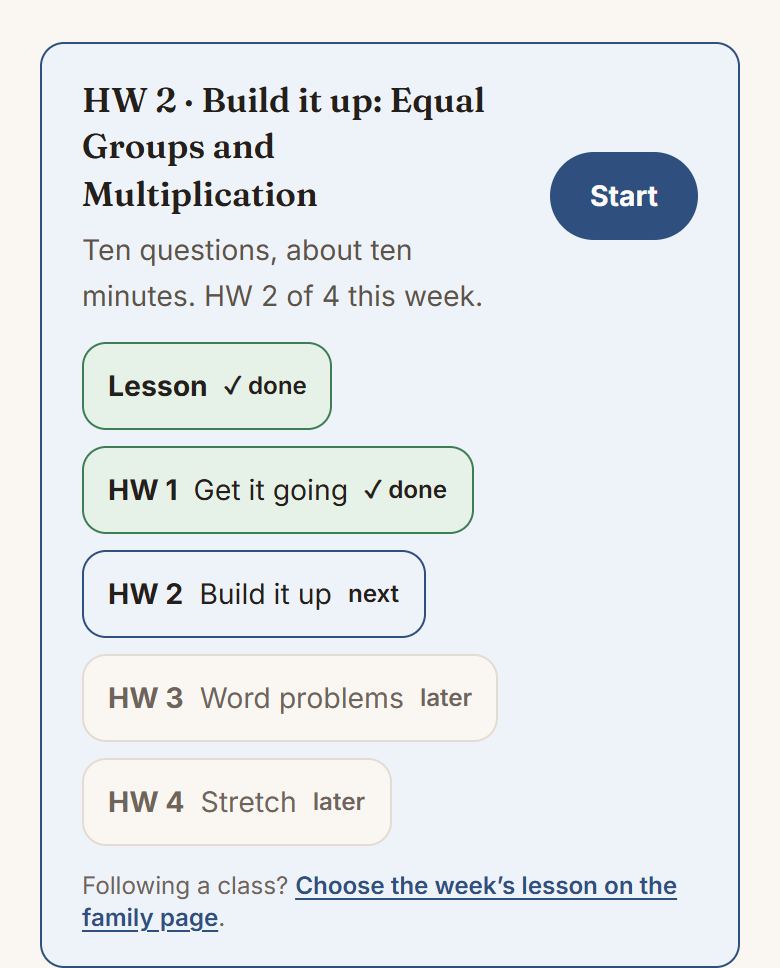
If your child is in a class, the class sits above all of that for the hour it is meeting, with a button that opens it. On every other day it is one quiet line saying when the class next is.
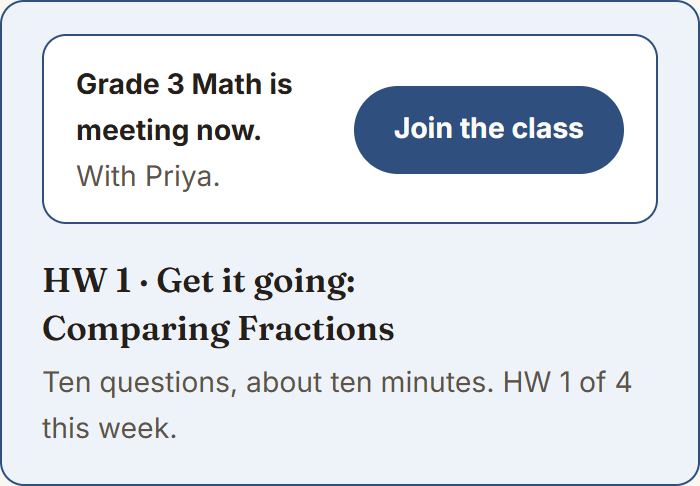
What next
The course list is worth a chapter of its own, and that is the next one.